Welcome To Pengtao Sun's Home!

  Home Personal Teaching Research Publications Presentations Projects


Useful Links

:: Journal Coverage

:: Journal Citation

:: Journal Search

:: Journal Ranking

:: SCI,EI,ISTP


bullet

Fluid-Rotating Structure Interactions (FRSI)

Hydroelectric power generating system produces renewable energy and remains crucial for society and industry. The most significant part of this system is the hydro turbine interacting with the water flow, which involves elastic solid materials and viscous fluids and belongs to the category of fluid-structure interaction (FSI).  The development of mathematical models and numerical methodologies is critical in practice for efficient simulations of the hydro turbine, which in turn guides the design and evaluation. 

Numerical simulations of FSI can be challenging. The fluid and solid are usually modeled in different coordinate systems: fluid in the Eulerian coordinate and solid in Lagrangian coordinate.  Moreover, as a typical characteristic of hydro turbine, the solid has rotations around a prescribed axis, which introduces additional difficulty in modifying the fluid mesh to accommodate solid motion. 

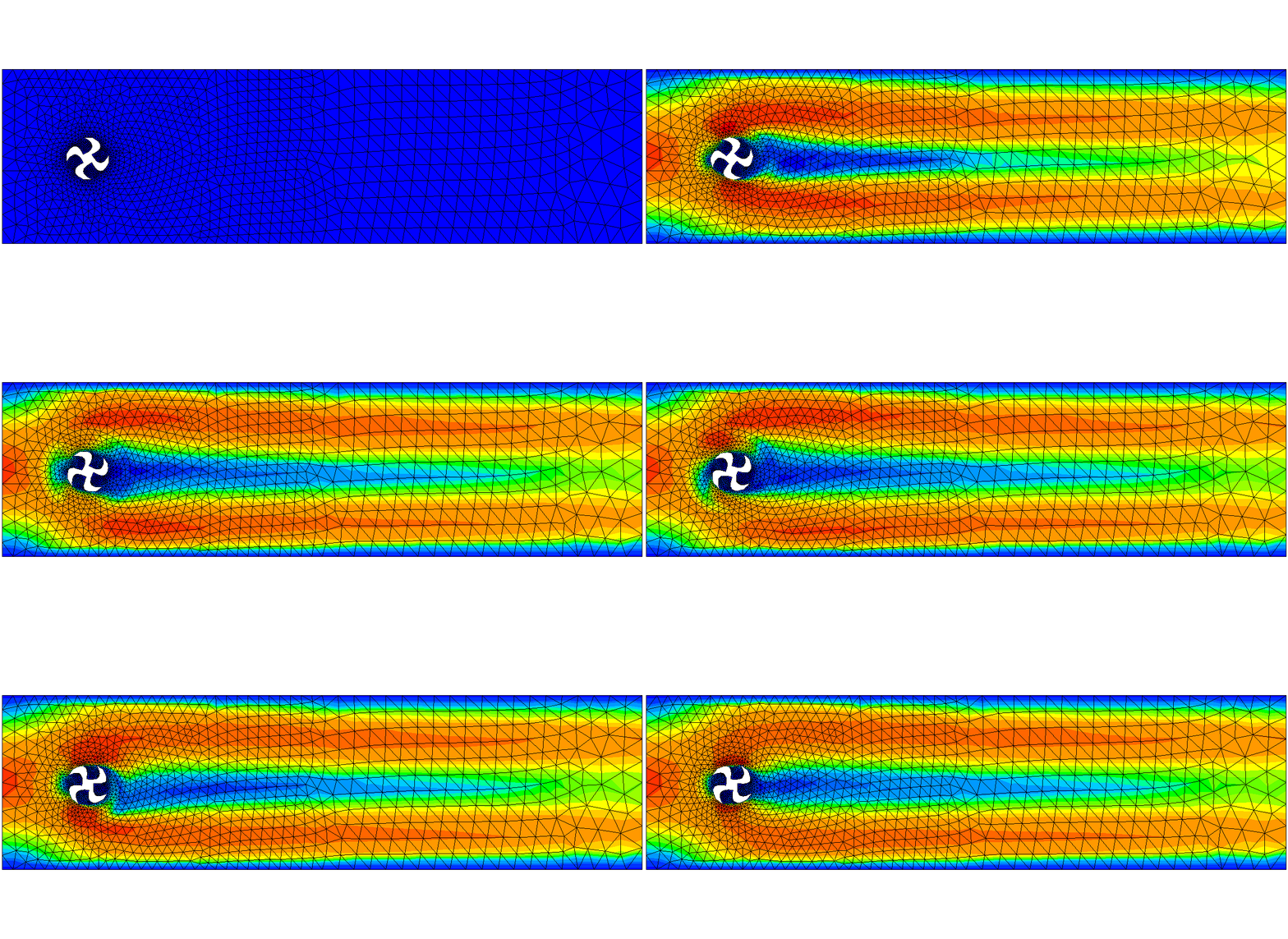
In our work, we approach these challenges in different aspects.  First, based on the observation that the hydro turbine, although exhibiting large rotations, has relatively small deformation, we develop linearized elasticity equations.  The linearization alleviates the burden on nonlinear solver and improves the well-posedness of spatial discretization.  Second, we propose a new approach to solve the ALE mesh motion for rotating structure.  Circular or cylindrical buffer zones are introduced, within which the mesh is deformed to conform with the exterior fluid mesh and to accommodate structure motion.  Moreover, we analyzed the well-posedness of the spatial discretization and demonstrated the discretization is solver-friendly.

In conclusion, our work has greatly improved the existing simulation methodologies for hydroelectric power generator. The proposed techniques contribute to fast, accurate, and efficient simulation algorithms for fluids interacting with rotating structures.

bullet

State of The Art and Related Works


bullet

Brief Presentation


bullet

Highlights:

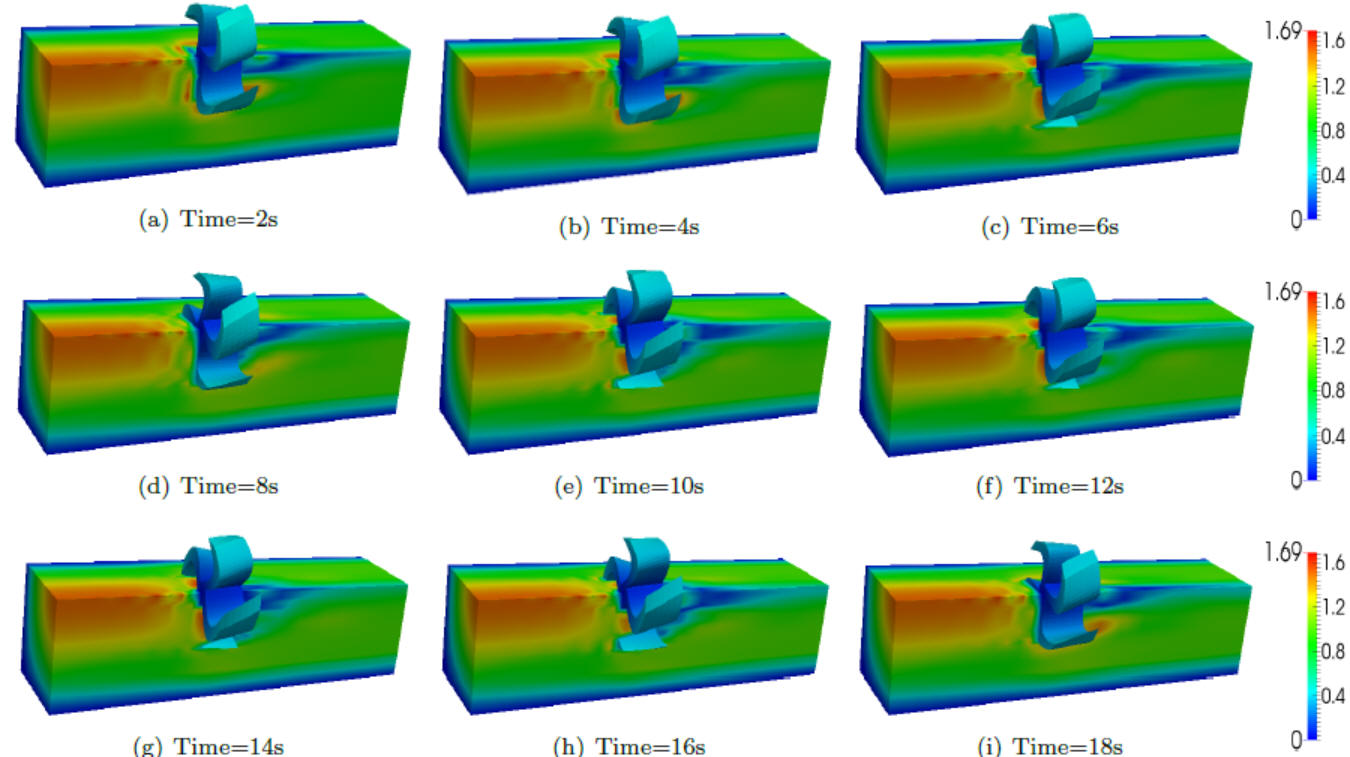
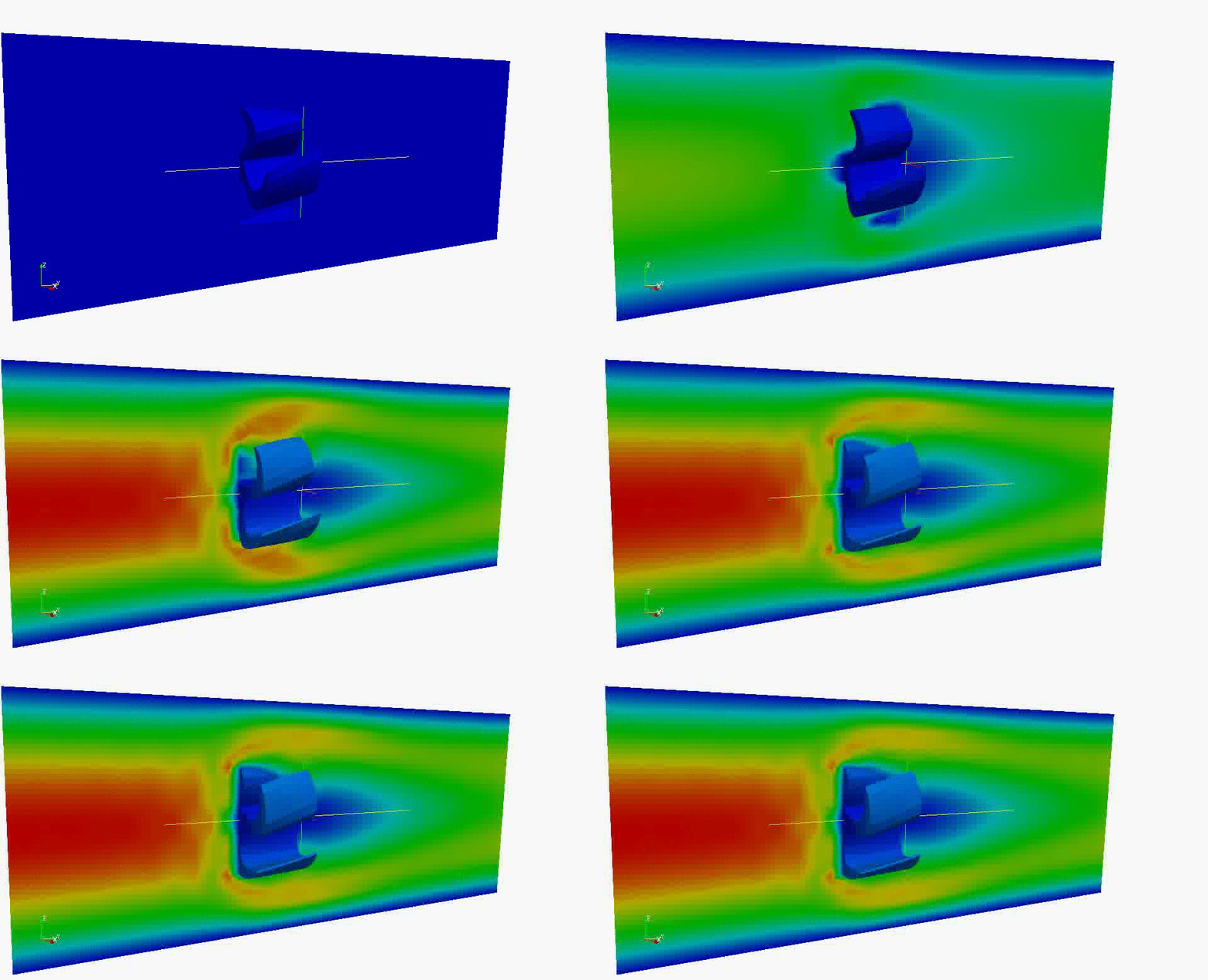
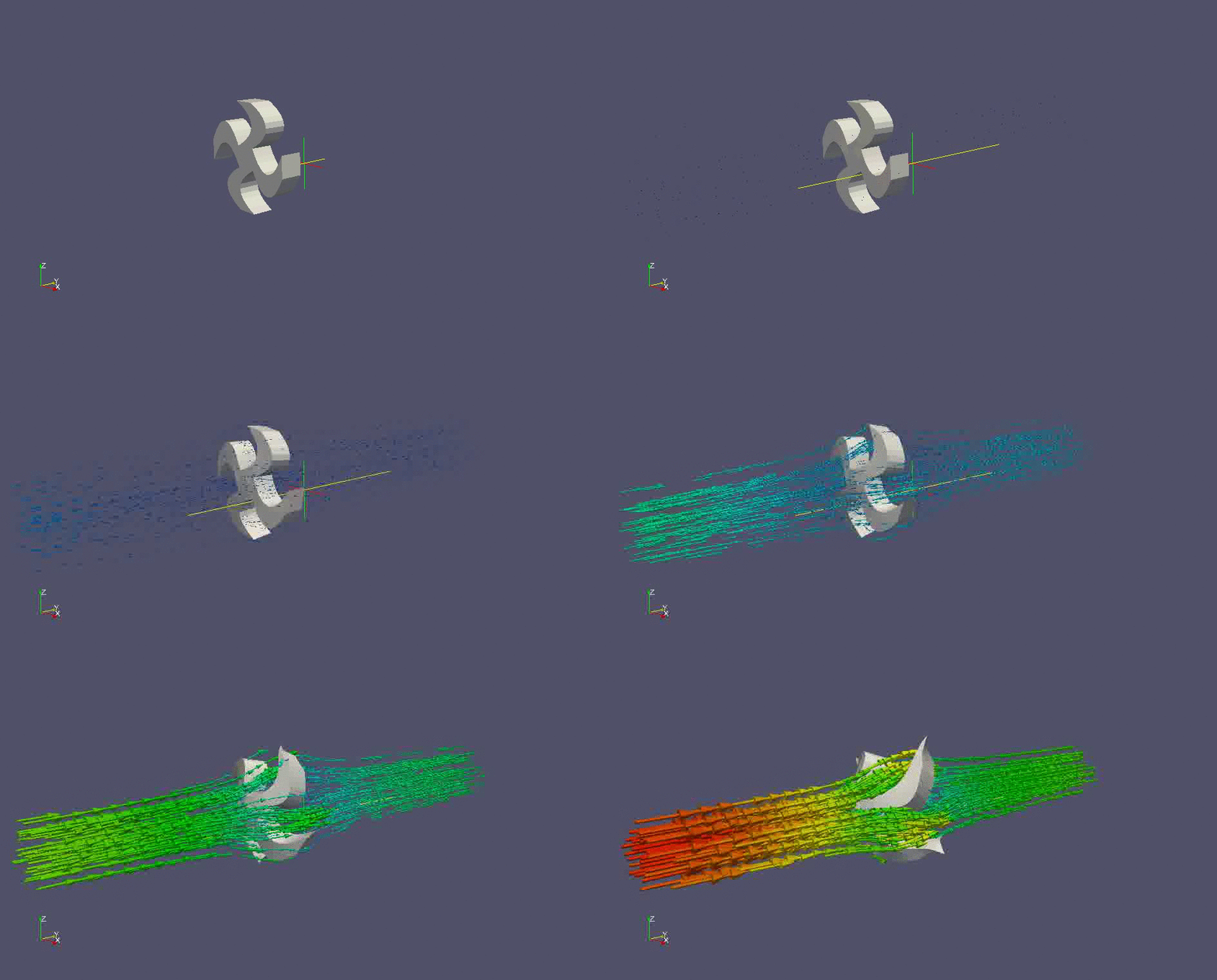
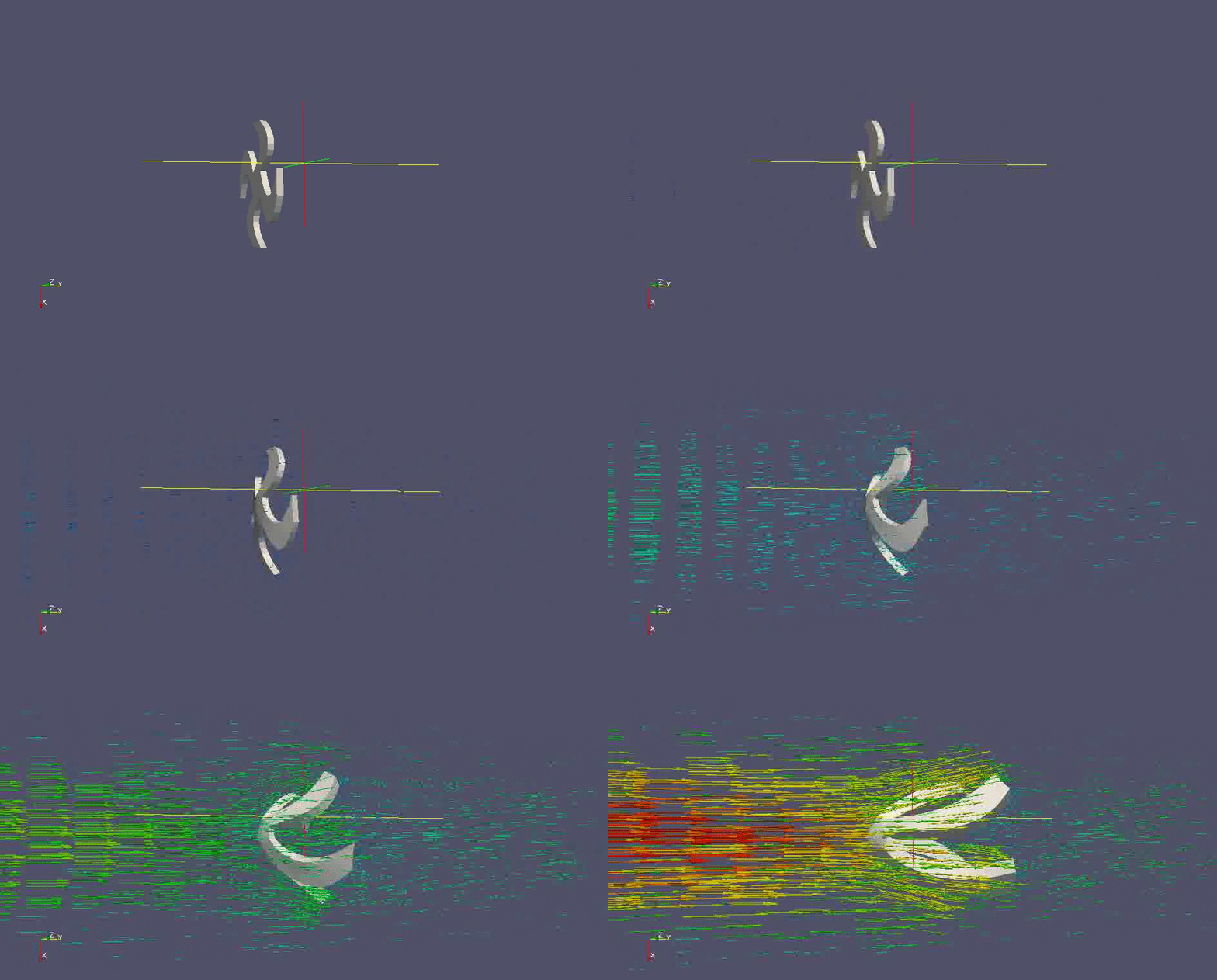
  1. A monolithic FSI model for an elastic structure that is immersed and spinning in the fluid.

  2. A linearized constitutive model for the rotational and flexible structure.

  3. A modified ALE mapping for the moving fluid mesh in the buffer zone that remains conforming with the rotating structure mesh through fluid--structure interface and with the stationary fluid mesh through fluid-fluid interface all the time.

  4. A monolithic fast solver for saddle-point system formed by fluid-structure velocity block and fluid pressure block.

  5. Numerical validations for the influence of buffer zone's size on the accuracy of FSI simulation and for the sensitivity of FSI's finite element discretization parameters.

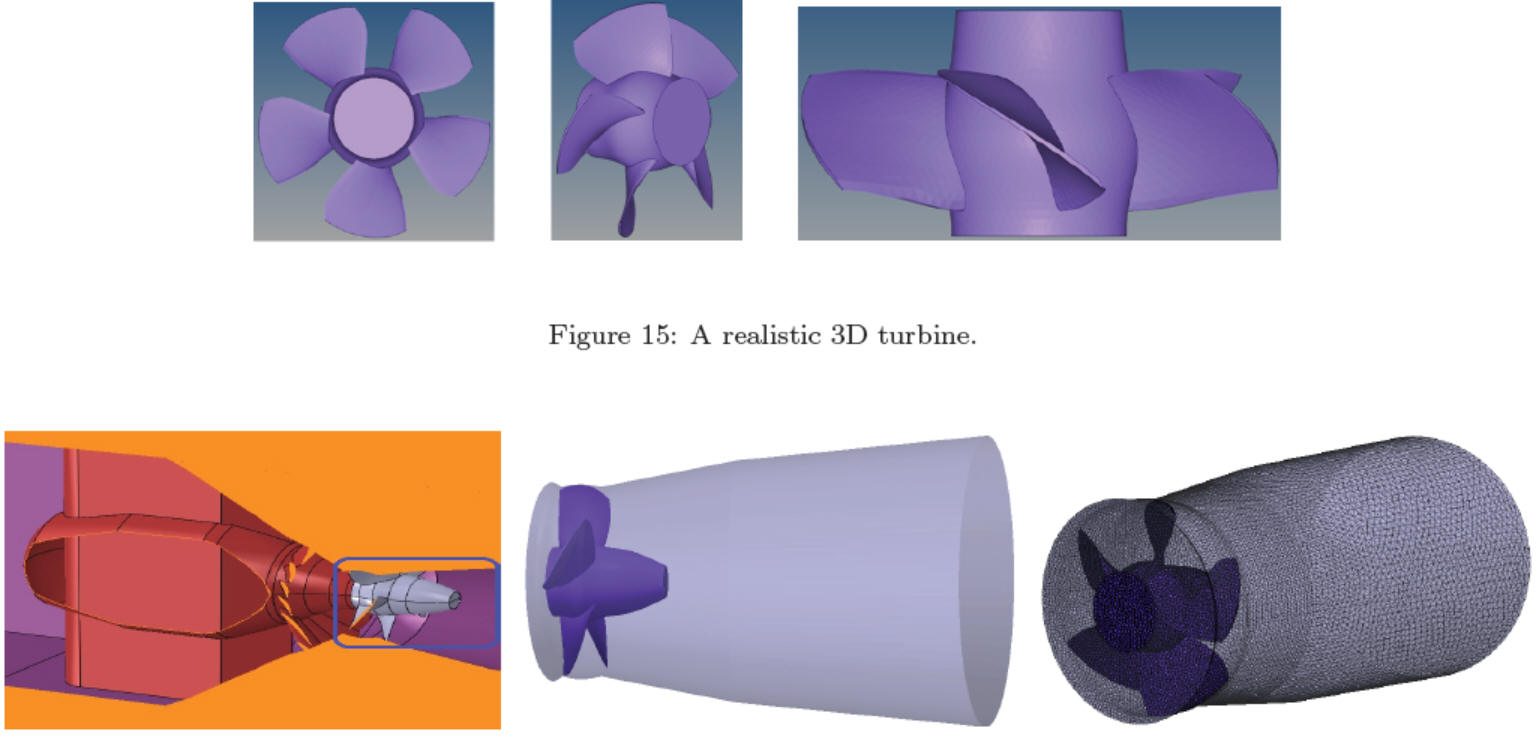
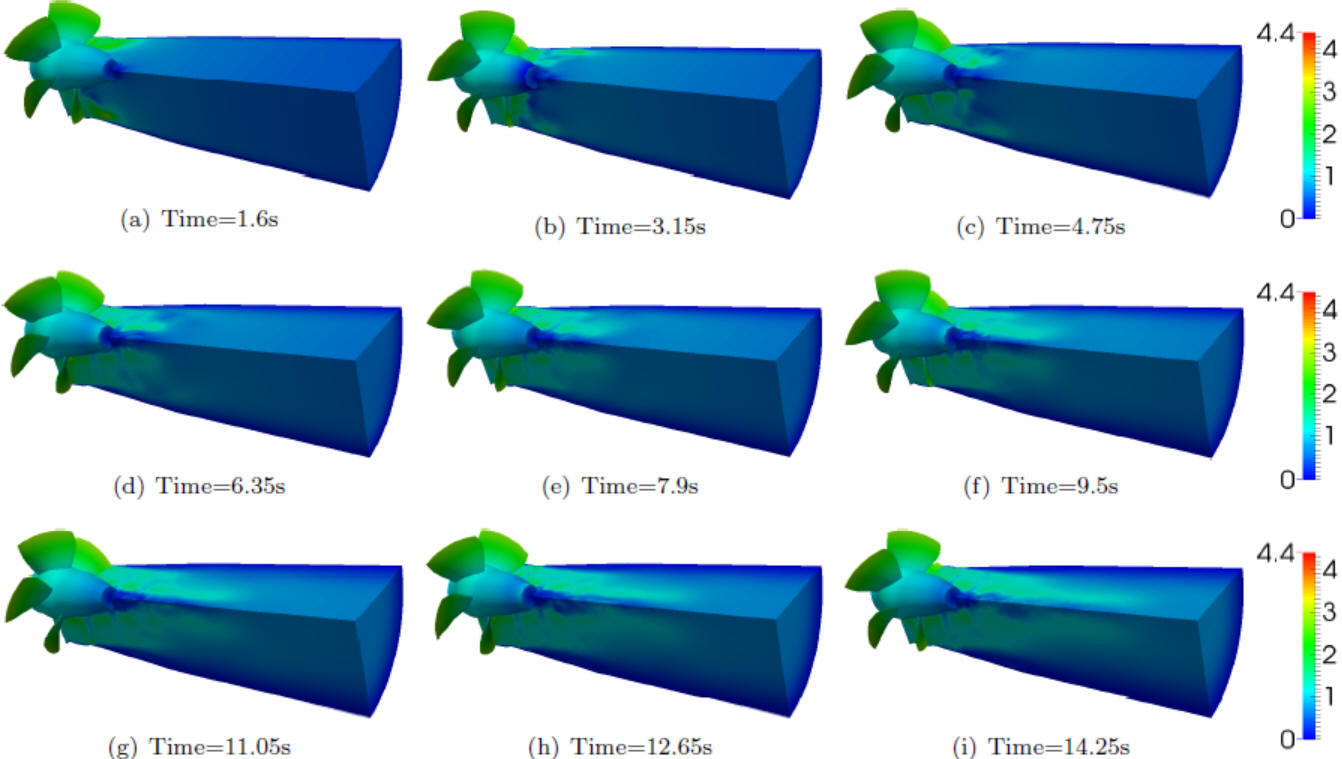
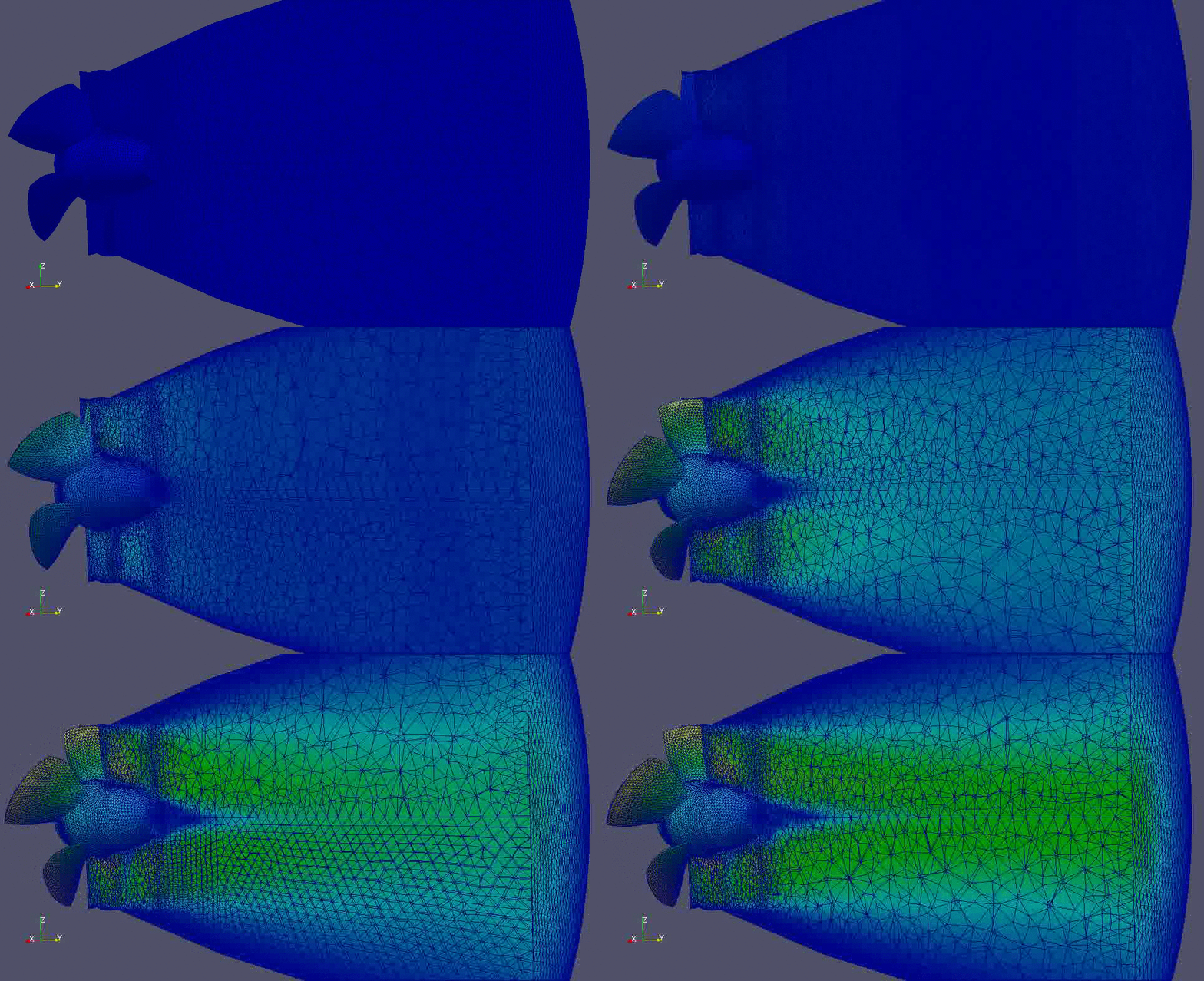
  6. A realistic hydro-turbine simulation that is immersed and actively rotating in the fluid flow.
     

bullet

Publications:

  1. Modeling and simulation for fluid-rotating structure interaction, Kai Yang, Pengtao Sun, Lu Wang, Jinchao Xu, Lixiang Zhang, Computer Methods in Applied Mechanics and Engineering, 311 (2016), 788–814.

  2. Well-posedness and Robust Preconditioners for Discretized Fluid-Structure Interaction Systems, Jinchao Xu, Kai Yang, Computer Methods in Applied Mechanics and Engineering, 292 (2015), 69–91.

  3. Full Eulerian finite element method of a phase field model for fluid-structure interaction problem, Pengtao Sun, Jinchao Xu, Lixiang Zhang, Computers and Fluids, 90 (2014), 1-8.

  4. Full Eulerian modeling and effective numerical studies for the dynamic fluid-structure interaction problem, Pengtao Sun, Lixiang Zhang, Chun Liu and Jinchao Xu, Recent Advances in Scientific Computing and Applications, Contemporary Mathematics, 586 (2013), 351-363.
     

bullet

Figures:


bullet

Animations:


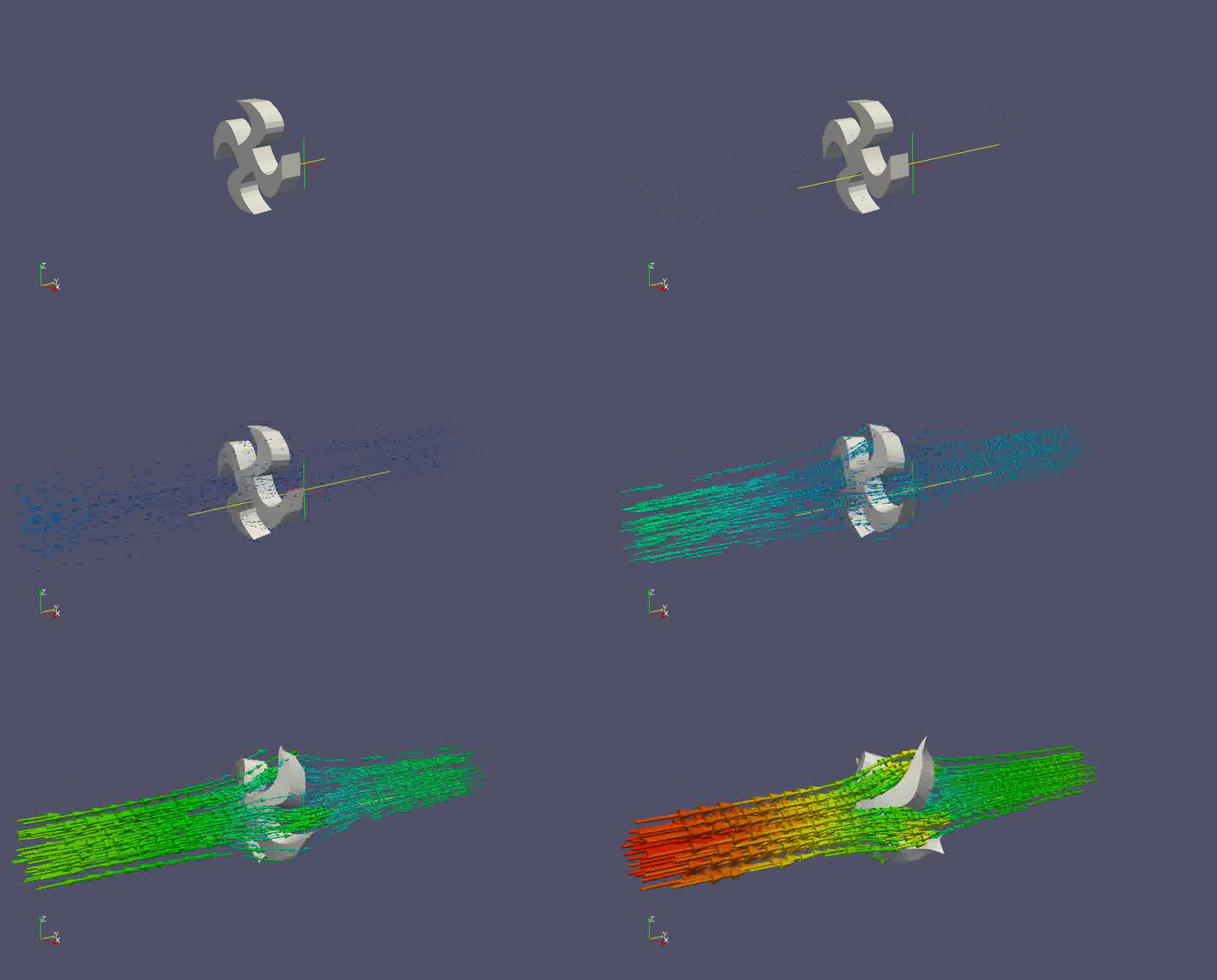
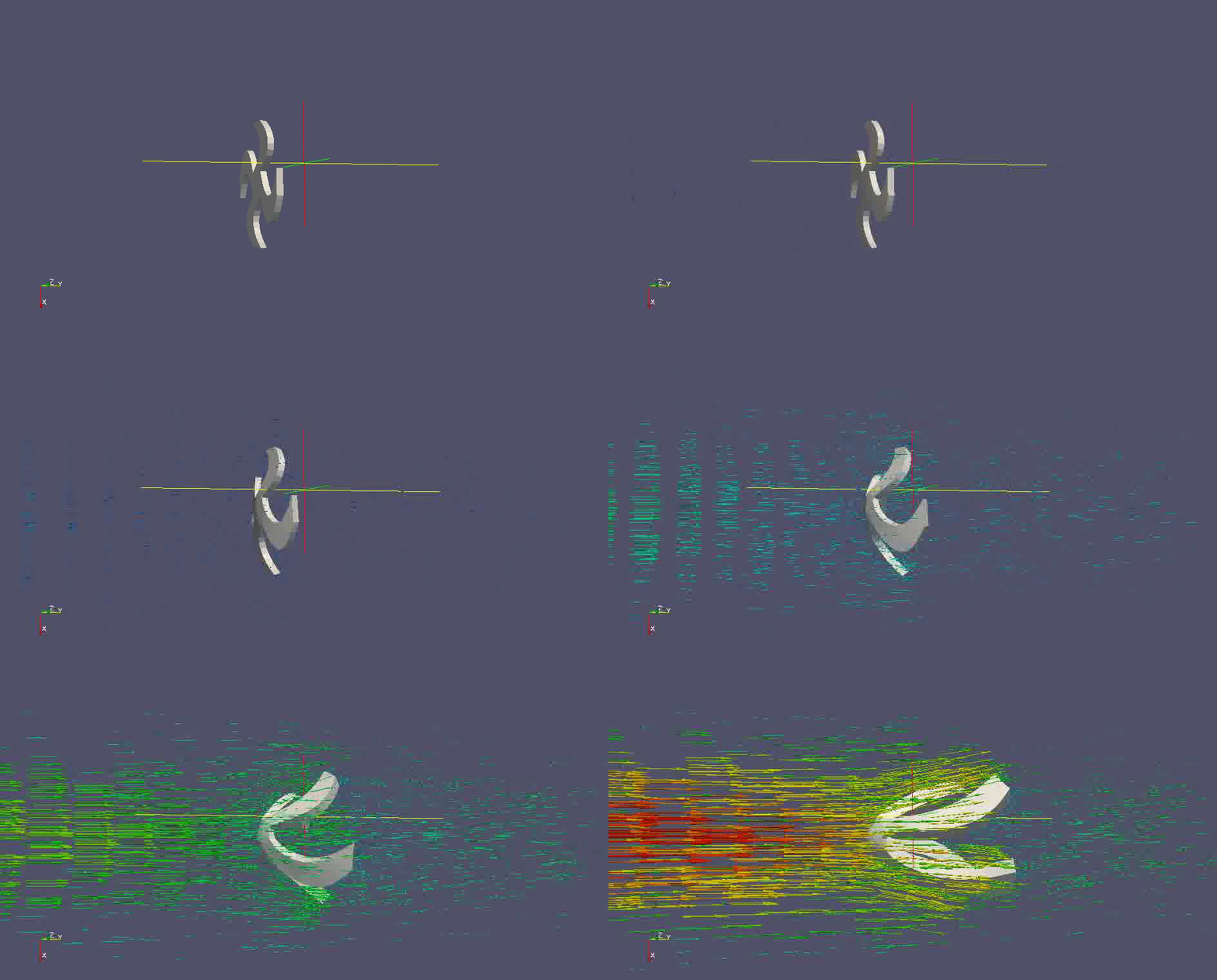
  • A 3D structure passively rotates in the fluid due to the incoming flow with Re=100: Velocity


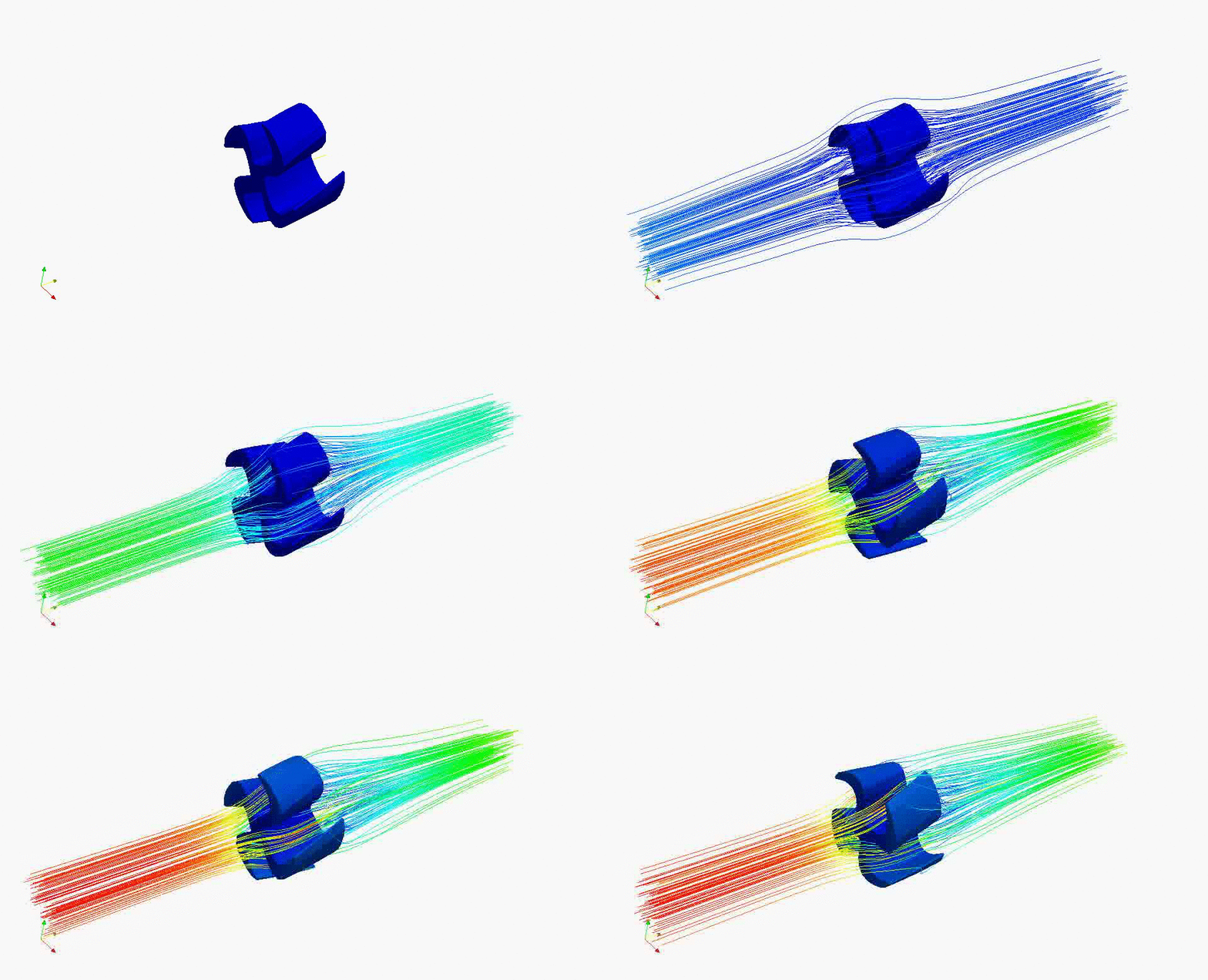
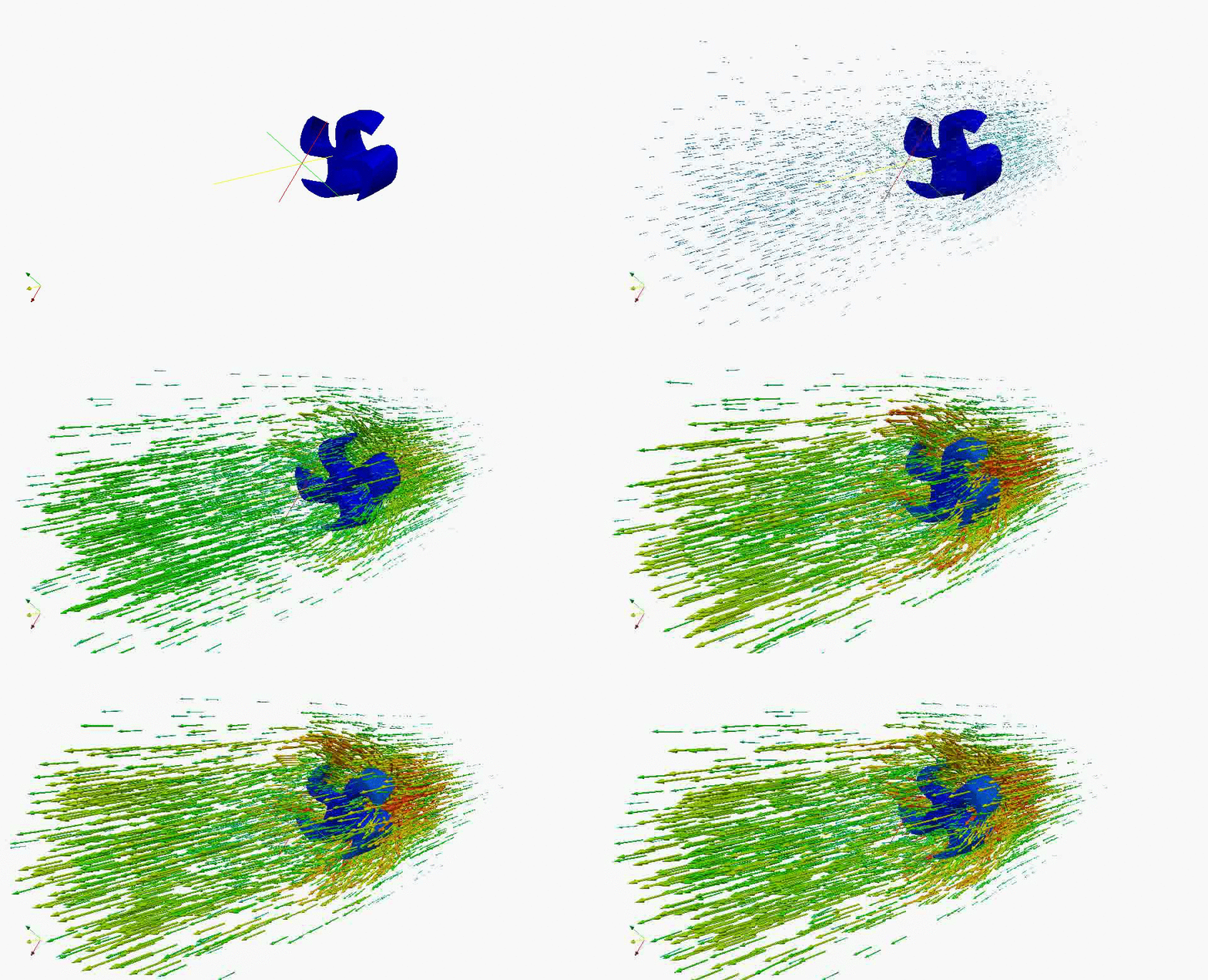
  • A 3D realistic hydro-turbine structure actively rotates in the fluid: Velocity Magnitude


Last updated: 01/17/2021

©2007 Pengtao Sun Math Department                                                                                         Home Personal Teaching Research PublicationsPresentationsProjects