|
 Hemodynamic Fluid-Structure Interaction of Cardiovascular System
During the past two decades, FSI simulation has become the most
promising solution method to solve the hemodynamic problem existing in
the clinical cardiovascular system. However, the complexity of
cardiovascular and artificial heart models causes the deficiency of the
existing FSI simulation package towards the clinical demands. First of
all, the space embraced by the cardiovascular system is irregular and
asymmetric, and the vascular wall is laminated as well. In order to
obtain a reliable numerical result to describe the real situation, the
number of mesh cell needs to be enormously raised inside the vascular
wall, leading to a large-scale and very time-consuming computation.
Secondly, the mechanical property of the vascular wall is considered as
a complex anisotropic hyperelastic material. The complicated
constitutive relation of such material may significantly increase the
computational cost and raise the convergence requirement for FSI
simulation. Thirdly, because a large deformation may take place in the
vascular wall during a cardiac cycle, the traditional FSI algorithm
cannot tackle a largely deformed vascular in an efficient and accurate
fashion, and always results in a nonconvergent or even a failed
numerical computation. Fourthly, the co-existence of deformation and
rotation on the elastic artificial heart pump challenges the existing
structure model as well as the implementation of arbitrary
Lagrangian-Eulerian (ALE) approach - a popularly employed method in FSI
algorithm. The complicated motion of artificial heart makes the
traditional ALE method fail to generate a shape-regular moving fluid
mesh which shall conform with the structure mesh all the time. Finally,
a high speed revolution occurring on the artificial heart pump
introduces another large difficulty to the traditional FSI simulation,
where, because the rotational spaces interact with the surrounding
stationary spaces, it is an art of numerical method how to remain the
rotating mesh always conforming with the stationary mesh through the
interfaces.
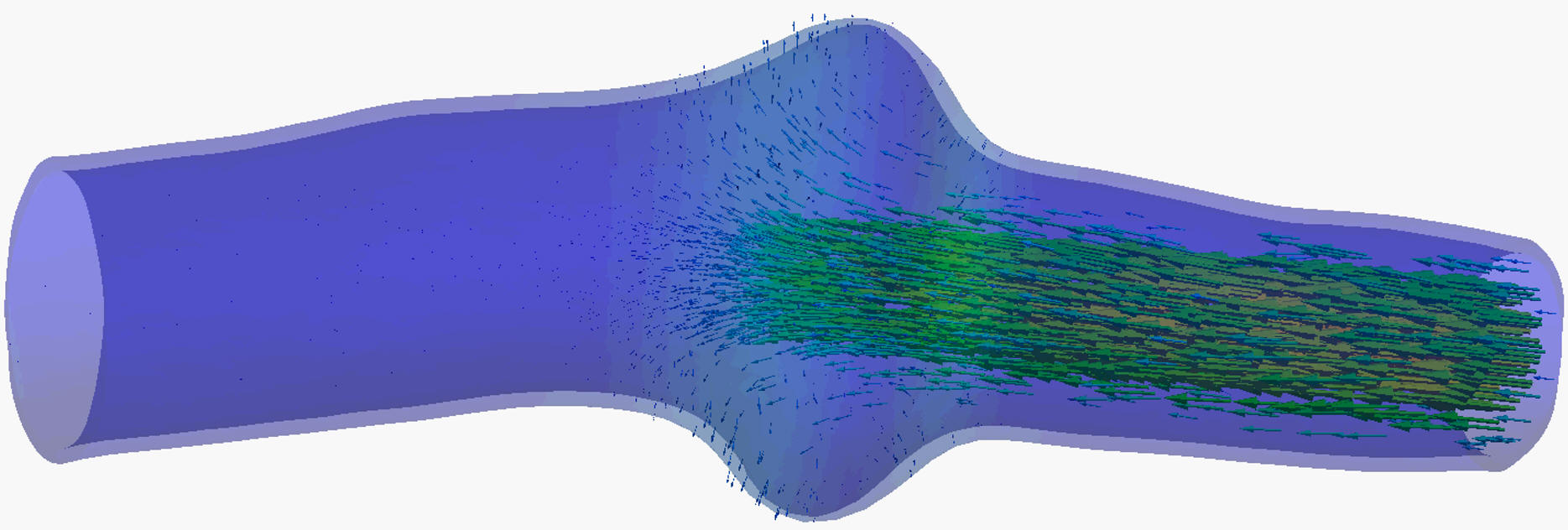
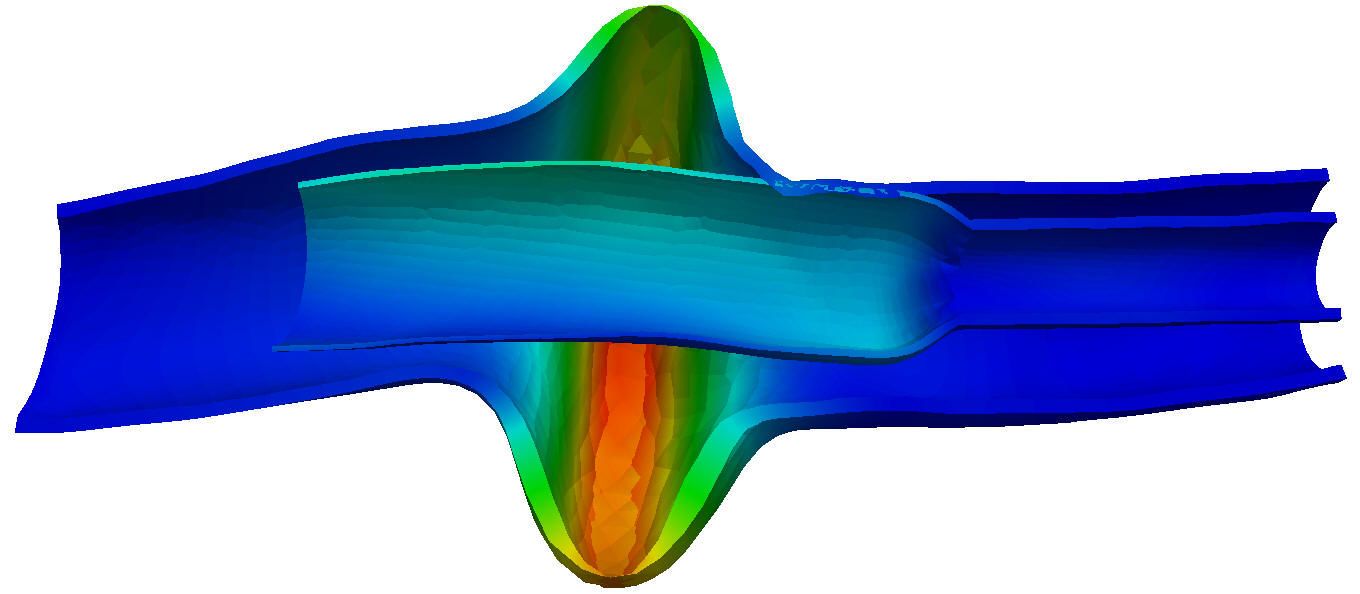
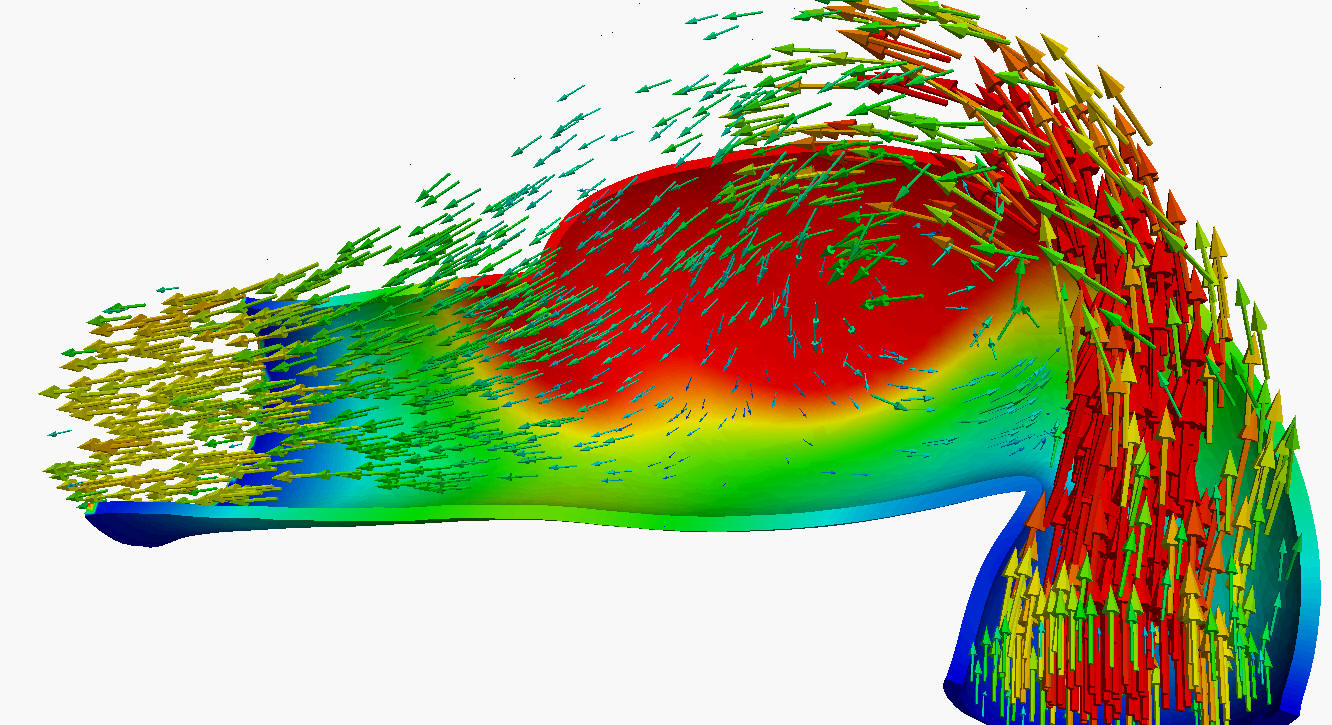
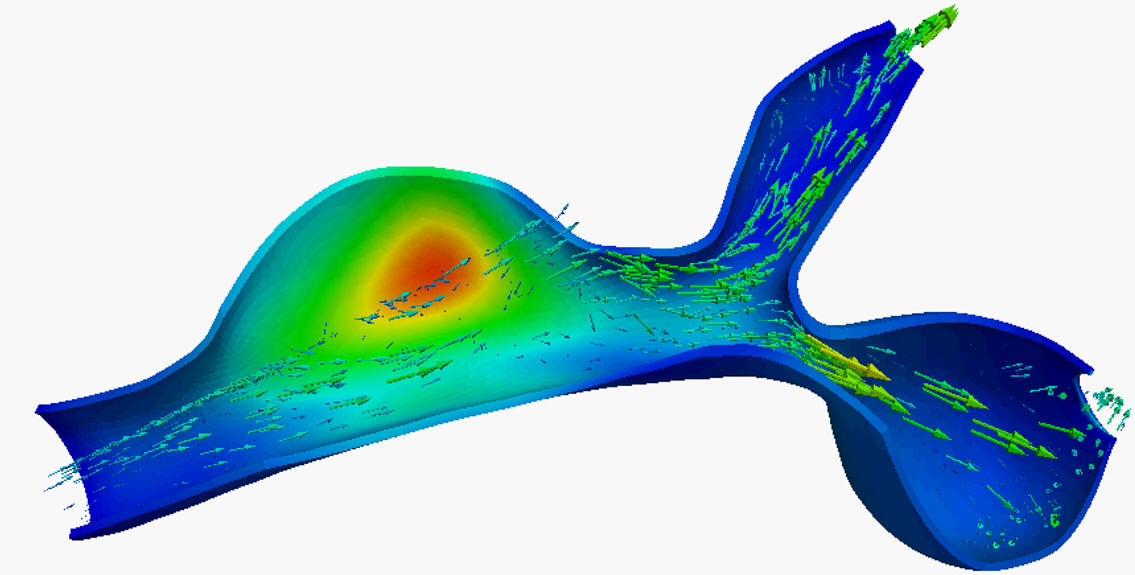
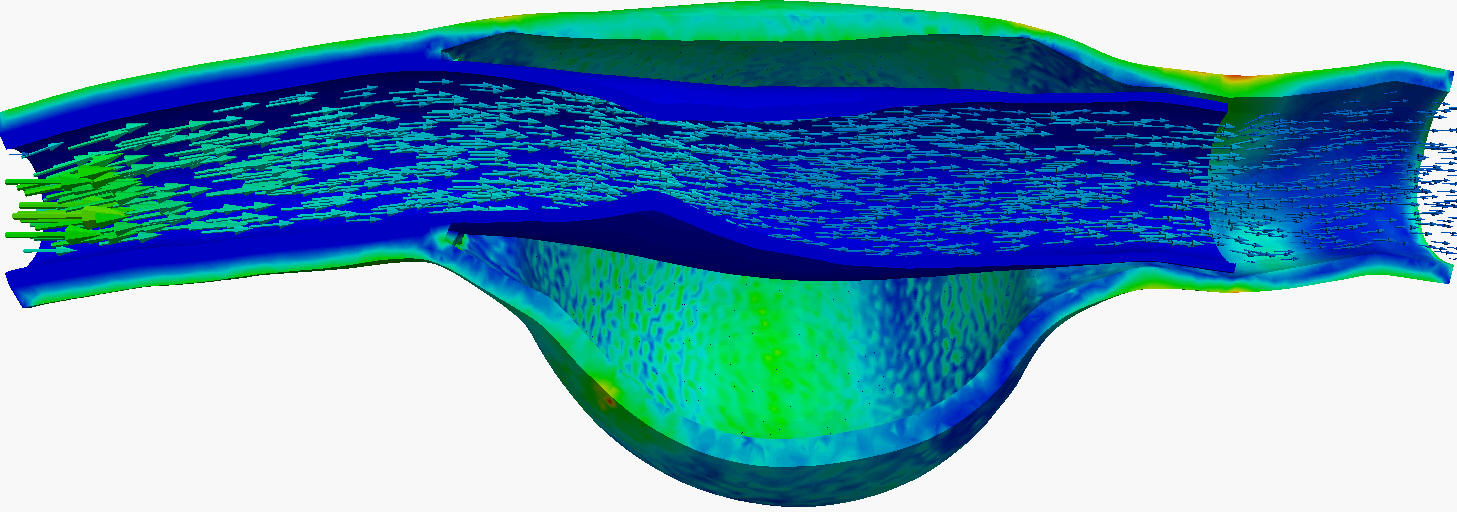
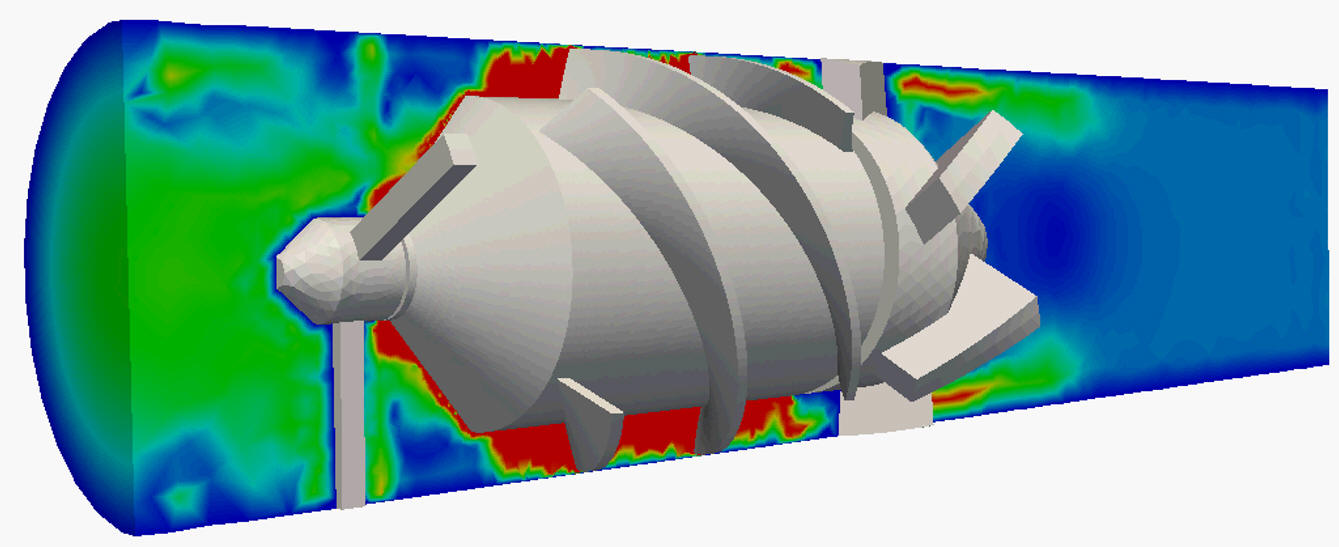
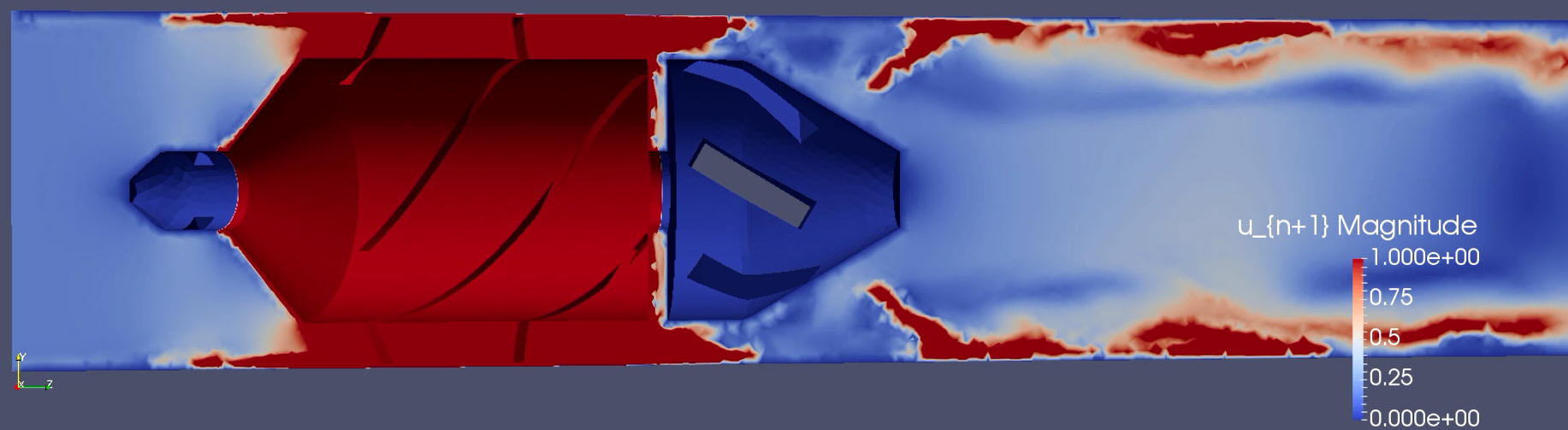
In
this project the PI devoted his research to the new modeling and
numerical techniques for the bloodstream-vascular-stent graft/artificial
heart pump interaction problems, aiming at overcoming the aforementioned
numerical difficulties and challenges, and developed advanced numerical
methodologies to improve the efficiency and accuracy of corresponding
FSI simulations, as demonstrated below by some well-done numerical
simulations.

 |
|