| Example
1 — Thermo-induced Marangoni
effects |
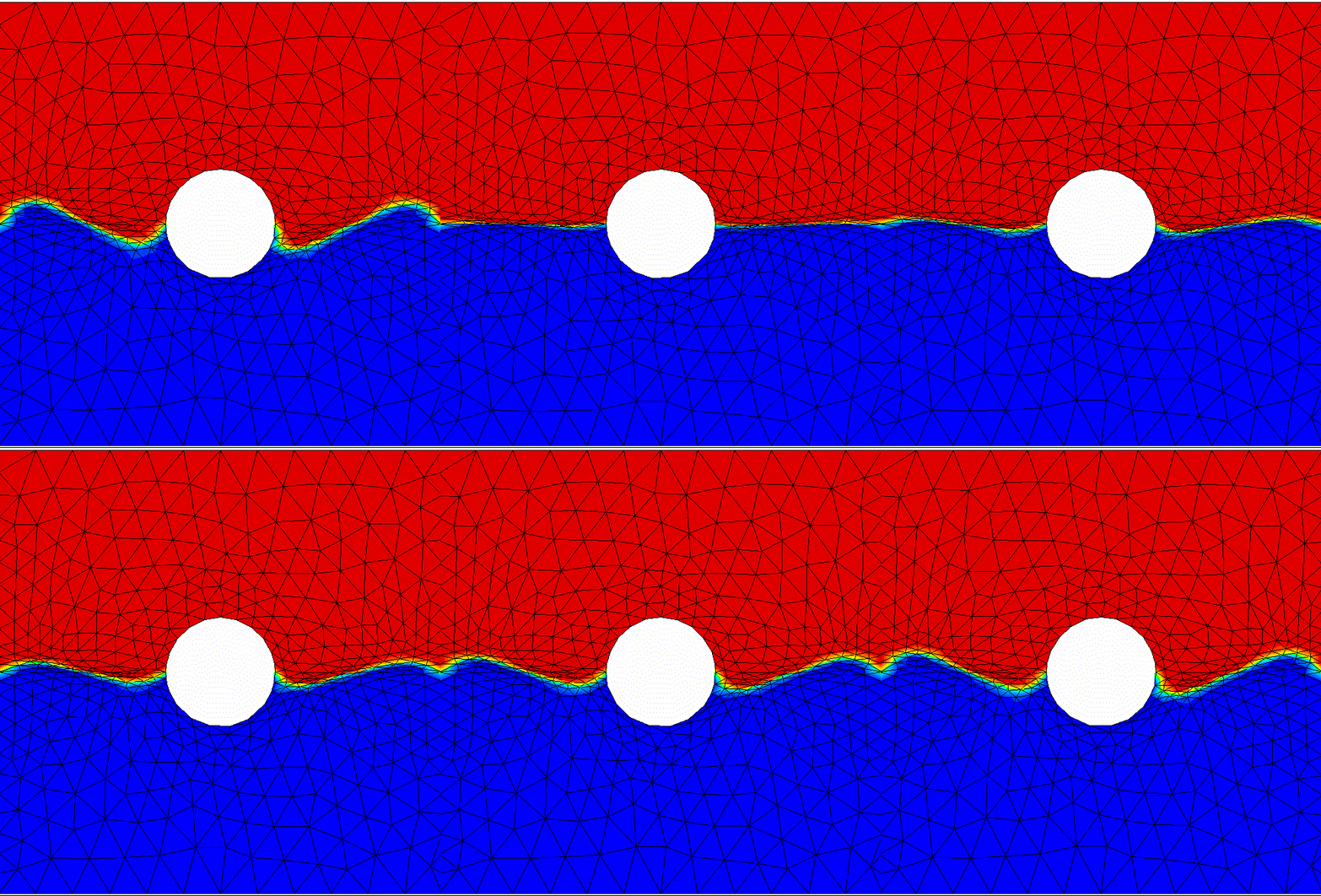
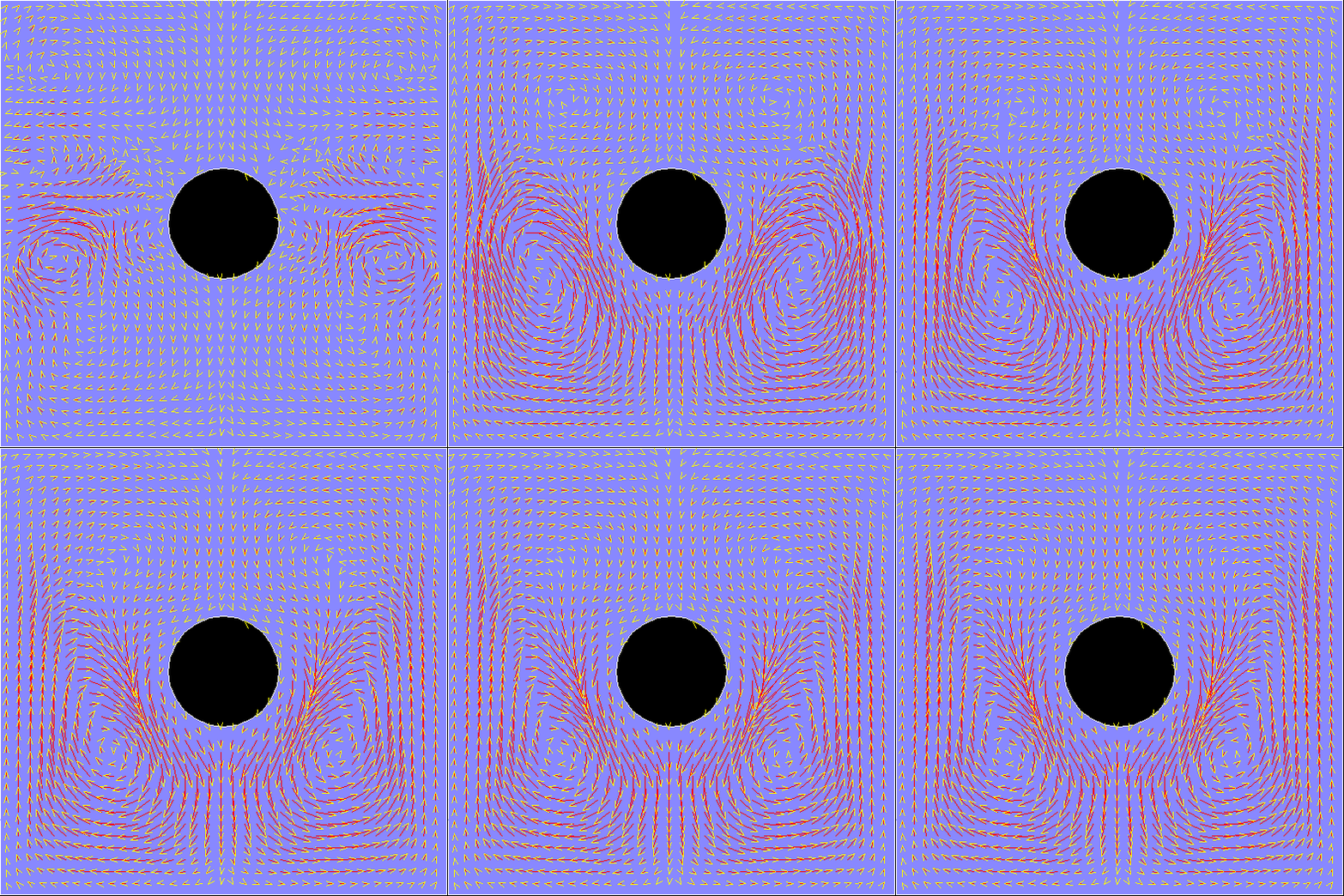
- One of two-phase fluids flow example,
is two-fluid Marangoni convection in which the heated boundary
is embedded in the free surface between two liquid with different
densities (with the lighter one on the top), the induced temperature
gradient on the surface drives convective motion, and induces
vorticity in the bulk fluid. This motion deforms the free surface
and lead to a complicated flow pattern. Preliminary numerical
experiments for a two dimensional model have already been performed
using grid adaptation techniques
|
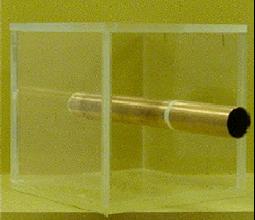
- The experimental counter part has been
constructed in the Pritchard Lab by Belmonte.
|
 |
 |
 |
| Example 2
— Gel fingering phenomenon |
 |
 |
 |
| The
Dynamics Of Gelation And Its Interaction With The Flow Fields |
| Participants:
Pengtao
Sun,
Andrew
Belmonte, Chun
Liu,
Jinchao
Xu |
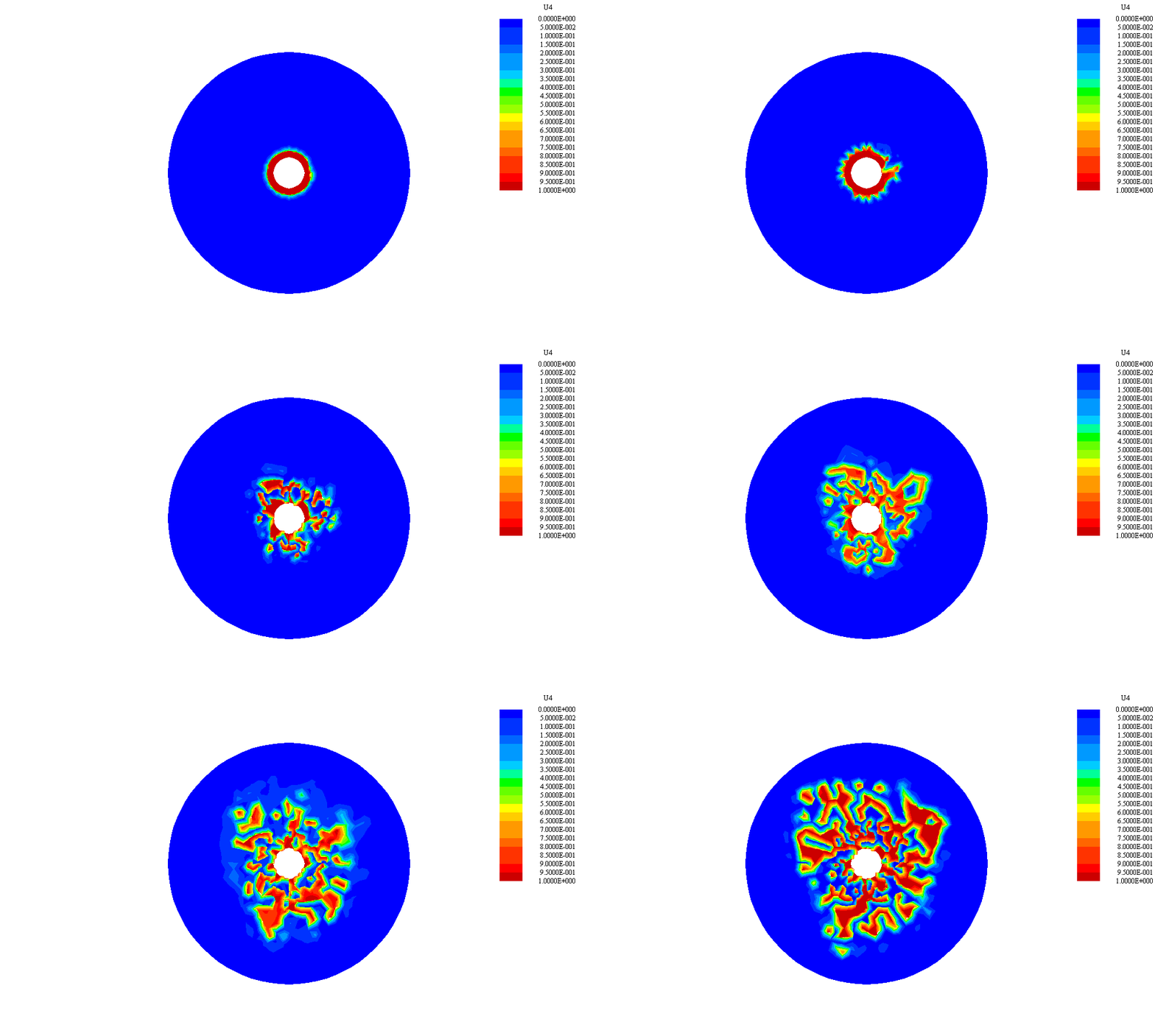
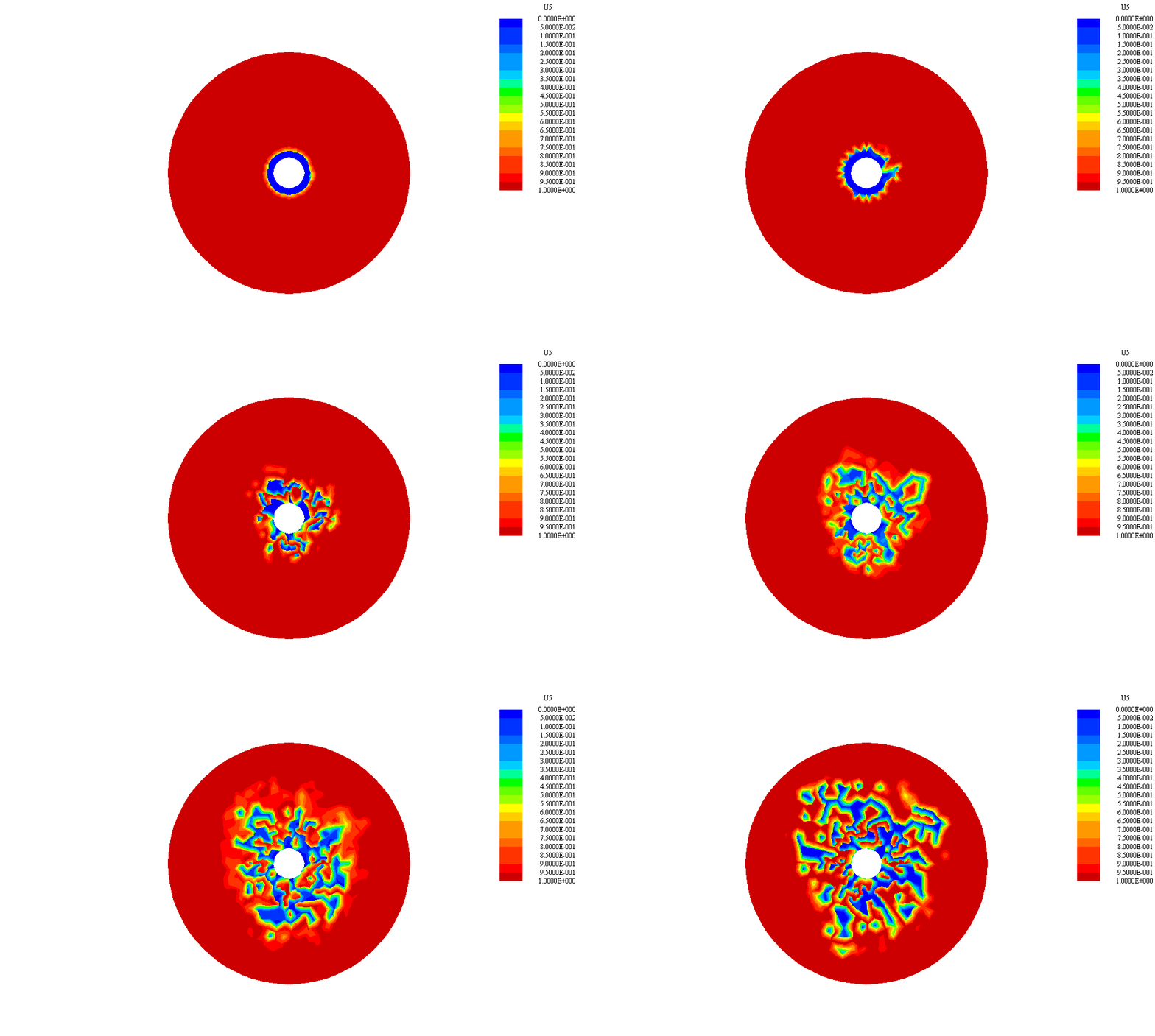
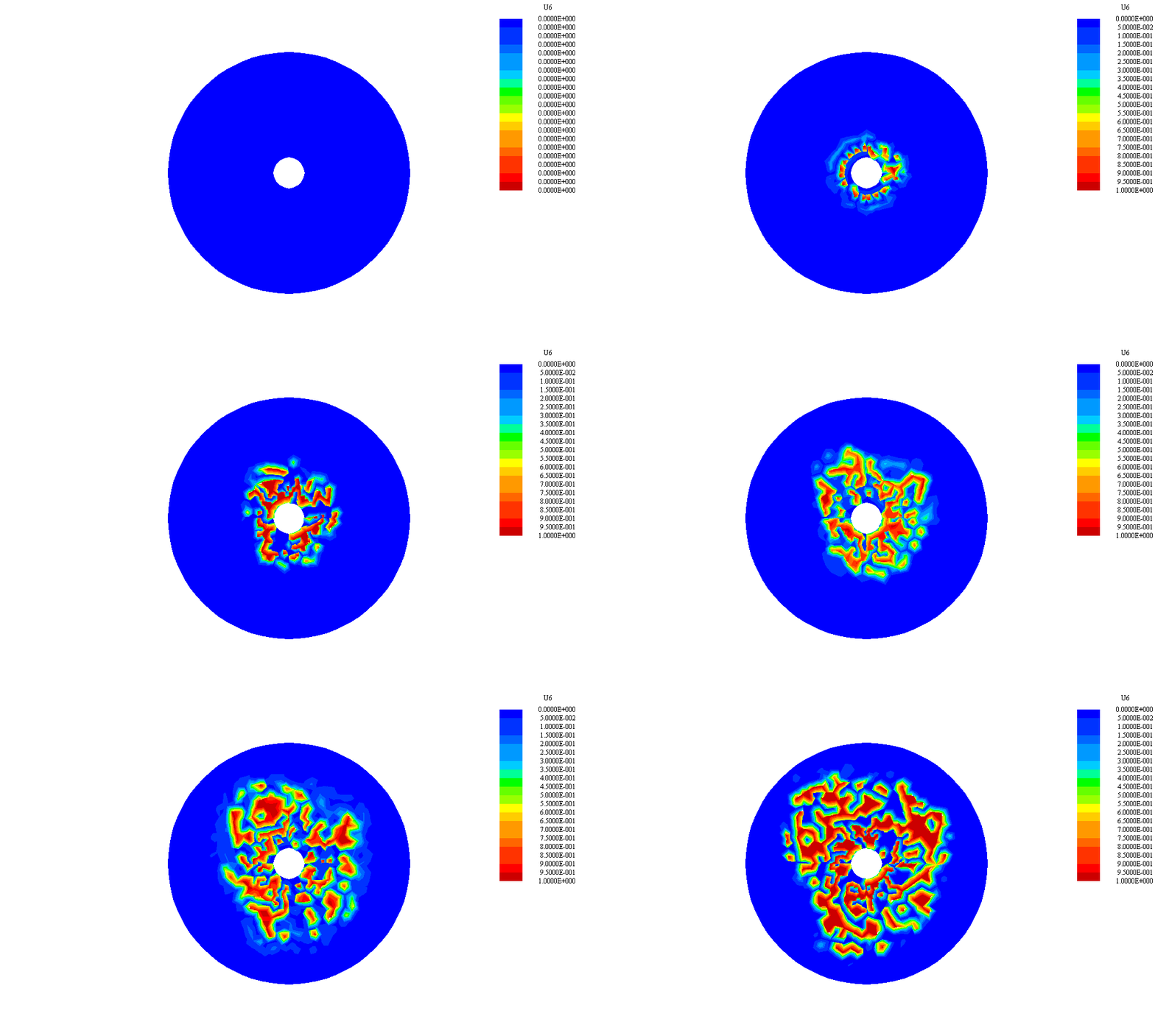
- The experiments in the Pritchard's Lab
show some very interesting phenomena in the process of the gelation
between diluted salt water and certain surfactant polymer fluid.
Most notably are their special rheological properties, among them,
the gel concentration-dependent diffusion of the two fluids and
the concentration-dependent surface tensions.
|
- Using an energetic variational method
with a phase field formulation, we derived the full hydrodynamic
system that takes into account the reaction-diffusion of the gelation,
they non-homogeneous surface tension and their interactions.?
|
- Numerical simulations using multilevel
adaptive finite element methods were performed in order to validate
the model and compare with the experiments.
|
| Example
3 — Surface water waves |
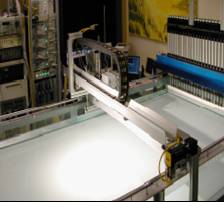
- Another even more challenging example
is in the area of surface water waves. The Pritchard Lab contains
a wave basin with a segmented, programmable wave-maker system
that is capable of generating both 2D and 3D water waves. These
wave motions are typically modeled by the (inviscid) Euler equations
assuming the flow to be irrotational. Yet, both viscous and rotational
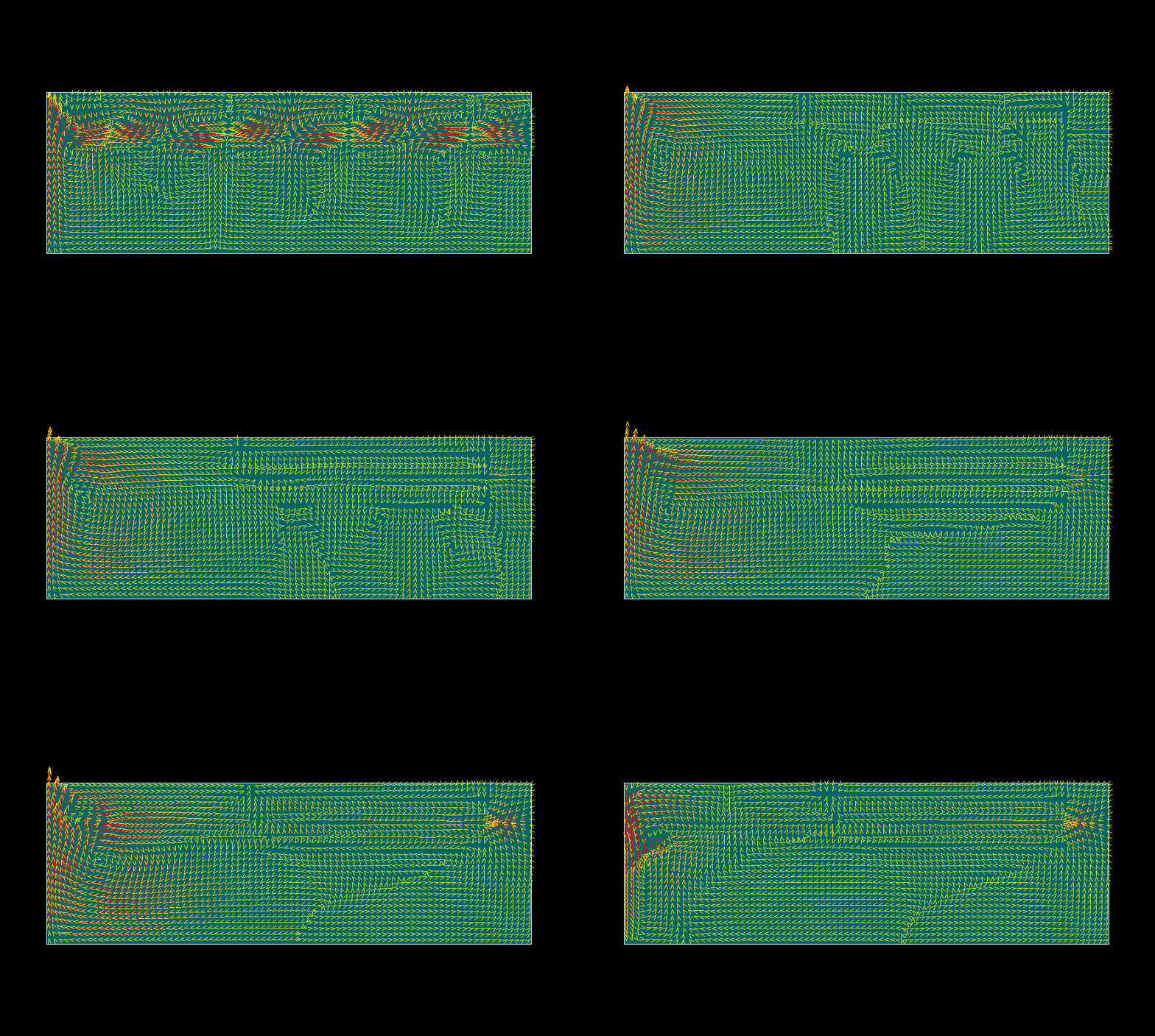
effects have been observed in many experiments. In particular,
a remarkably stable 2D vortex has been observed in 2D and weakly
3D experiments carried out by J. Hammack and D. Henderson. The
vortex forms near the center of the basin, spanning its width,and
then propagates slowly to the wave-maker where it is extinguished.
|
 |
- We will use our grid adaptation and multigrid
techniques to develop a \numerical wave basin" based on the
Navier-Stokes equations that will be used to predict wave motions
as well as resulting vortical motions.
|
 |
Comments and Questions? Please email
pengtao.sun@unlv.edu
Back to Home
|